Case study · Life sciences
Closing the prostate cancer prescribing gap, and reaching the men who need it
For pharmaceutical market access and medical affairs teams
Coplug's spatial reasoning healthcare agent combines national NHS data with a company's own local intelligence to show where appropriate prescribing falls short of need, which communities are under-served, and how to reach them. Example: prostate cancer prescribing across four PCNs in a South East city.
Beyond published data
15 / 35+
insights derived for local cohorts and PCNs, not publicly available in this form
- 35+
- insights across need, prescribing, pathway, workforce and equity
- 1 session
- from question to market brief, against around 2 weeks of analysis
- Outreach sites
- local pharmacies, community hubs and GP practices identified
- National + local
- NHS data combined with the company's own intelligence
The need
Challenge. Understand where appropriate prostate cancer prescribing falls short of need, which groups are under-served, and where to focus engagement and service support.
Why it was hard. The evidence spans prescribing, cancer pathway performance, workforce, deprivation and ethnicity, each at a different geography, and has to be combined with local intelligence. National risk factors, such as the higher prostate cancer risk among Black men, must be translated to local cohorts.
Driver. Market access, medical affairs and health inequalities (Core20PLUS5) planning.
What Coplug delivered
- Target market and priority segments by PCN
- Prescribing analysis against local, regional and national benchmarks
- Clinical and pathway analysis, including treatment waiting times
- Workforce capacity and service site selection
- Health equity and screening gap, with 2030 outlook
- Diagnosis and mortality burden forecast to 2040
- Distribution channels and strategic recommendations
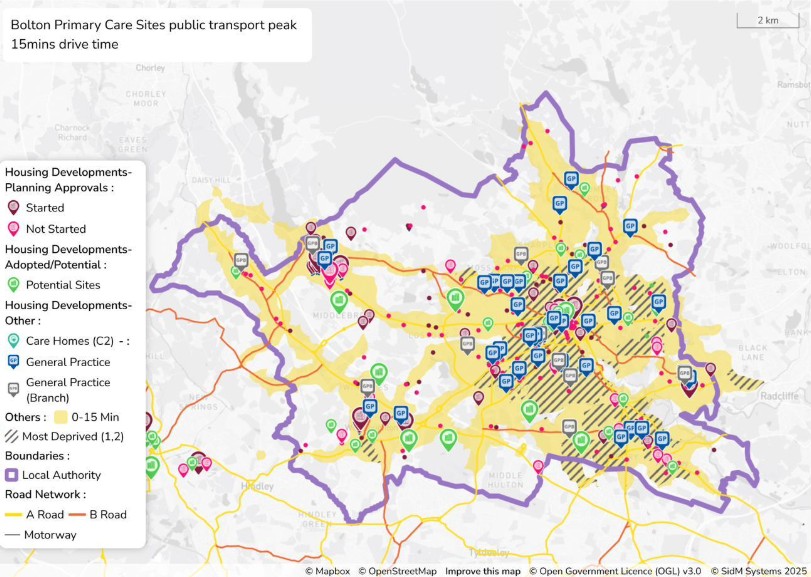
- Outreach sites: local pharmacies, community hubs and practices to reach under-served groups
Decisions it can inform
Engagement. Where to prioritise, which clinical and commissioning stakeholders to involve, where a nurse-led or pharmacy-based service could be sited, and which local pharmacies, community hubs and GP practices to use for outreach in high-risk communities.
Outcome. A sourced, auditable market brief that ranks PCNs by need, links under-prescribing to risk and deprivation, and sets out channels and practical next steps.
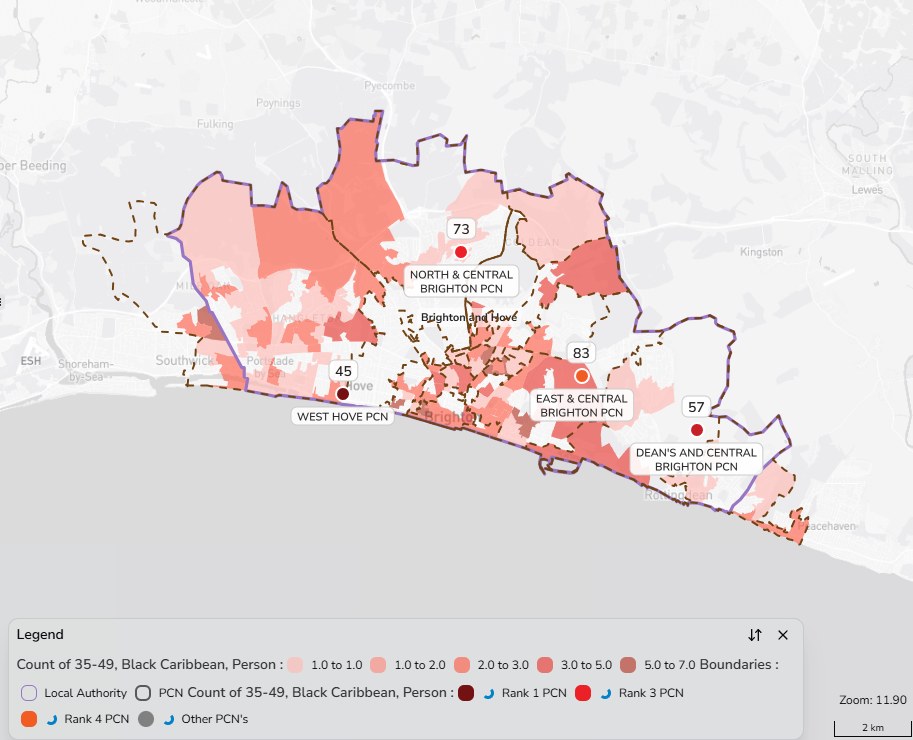
Where higher-risk cohorts live
The market brief
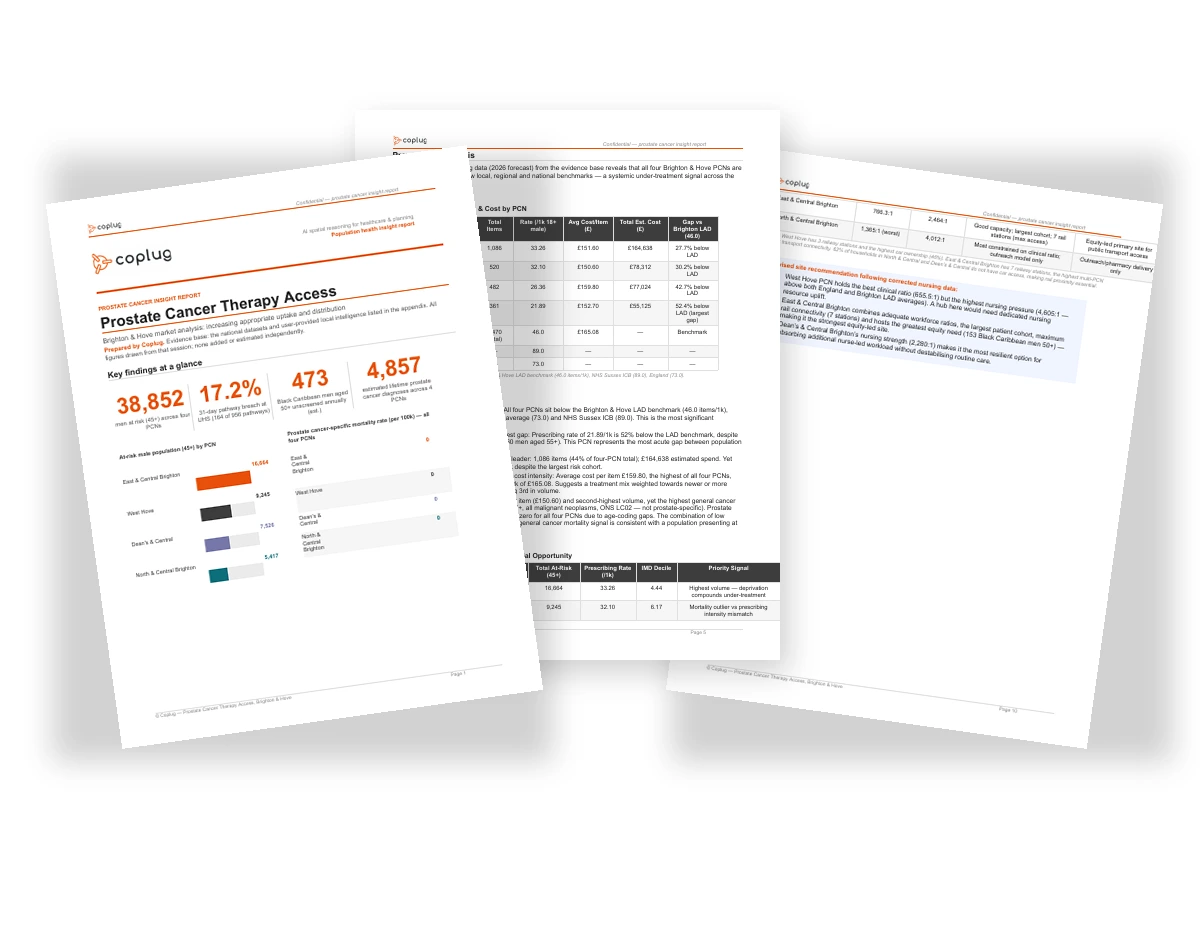
Example findings and recommendations
The outputs are not just statistics. The brief draws out findings and recommendations, backed by Coplug's knowledge base of national policy and evidence.
- System-wide under-prescribing. All four PCNs prescribe below local, regional and national benchmarks, with the largest gap where the risk cohort is substantial.
- A screening gap. A sizeable cohort of Black Caribbean men aged 50+ is likely not receiving annual PSA testing, concentrated in the most deprived areas.
- Pathway pressure. The local trust breaches the 31-day treatment standard on a significant share of prostate pathways, and referral conversion is below the England average.
- Workforce shapes delivery. Clinical and nursing capacity vary widely between PCNs, determining where a new service can be hosted without destabilising routine care.
- Recommendation. A dual strategy: an equity-led hub in the best-connected, most deprived area, with outreach and pharmacy-based delivery where the workforce is stretched.
- Recommendation. Engage trust urology and oncology, PCN clinical directors and ICB cancer leads with shared population evidence, and use identified pharmacies, community hubs and practices for PSA awareness and outreach.
Backed by industry-validated calculators and methodologies developed with NHS partners, using NHS Digital, OHID, ONS, Census 2021 and prescribing data, alongside user-provided local intelligence.