Healthcare case study · Cancer insights profiles
A cancer profile for every place in the ICB
NHS Kent and Medway ICB · Population health and commissioning
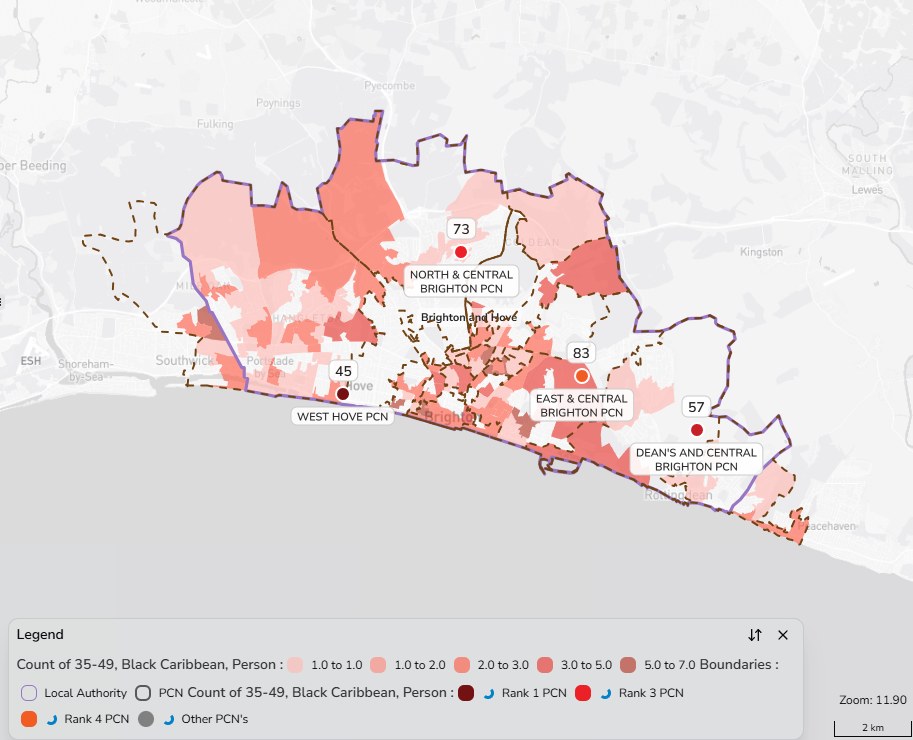
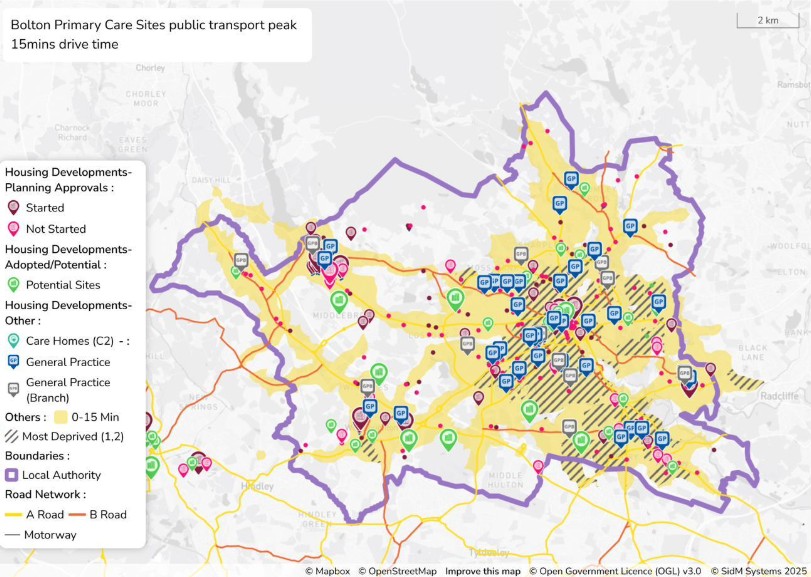
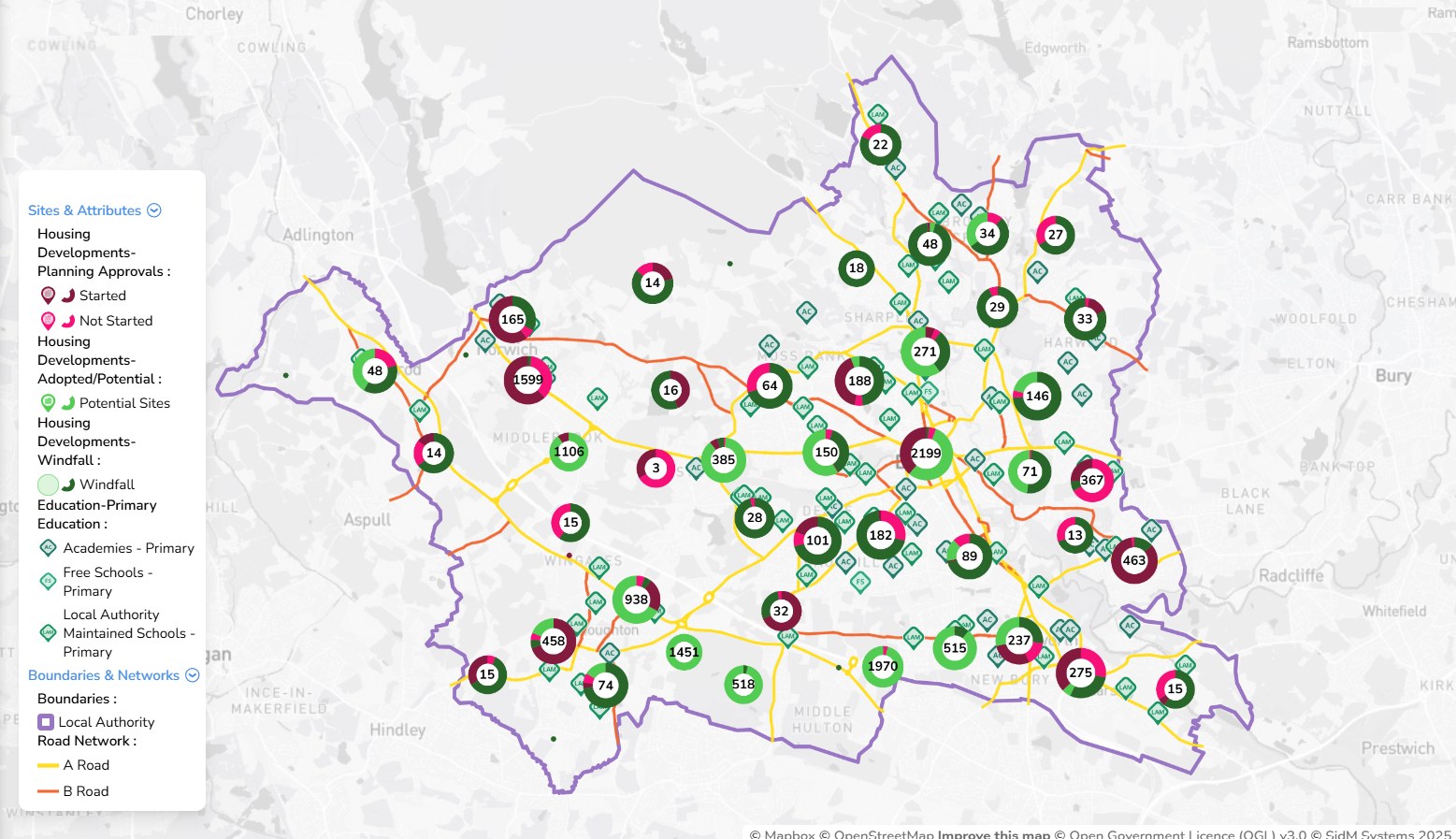
Led by prompts and questions set by the ICB's population health and commissioning teams, Coplug's spatial reasoning healthcare agent generated cancer insights profiles for every place area in the ICB, bringing screening, mortality, survival and care activity together at PCN level. Dartford, Gravesham and Swanley is one example.
Led by domain experts
8 weeks to 2 days
to produce each profile
- 70+
- insights in each cancer profile
- 9
- sections, from population profile to strategic recommendations
- All
- place areas profiled, each broken down to its PCNs
- ICB led
- prompts and questions set by the ICB's population health and commissioning teams
The need
Challenge. The ICB's population health and commissioning teams needed a consistent cancer profile for every place, to understand variation across the whole cancer pathway.
Why it was hard. Cancer evidence sits across screening, mortality, survival, waiting times and admissions datasets, at different geographies. Much of it is published only at ICB or trust level, and has to be rebuilt at PCN level within each place, often working around small-number suppression.
Driver. Cancer commissioning, Core20PLUS5 and population health planning.
What Coplug delivered
- Population and age profile: age, ethnicity and cancer prevalence, with 2030 forecasts
- Screening and early detection against deprivation
- Cancer mortality by site, sex and deprivation
- Cancer survival by site and sex
- Referral to treatment: waiting times and treatment
- Pathway and admission metrics
- Health inequalities summary and strategic recommendations
Decisions it can inform
Targeting. Where to focus screening outreach and awareness work, which pathways and providers need capacity attention, and which data gaps need resolving with data owners.
Outcome. A consistent cancer profile for every place in the ICB, linking screening, mortality, survival and care activity at PCN level, with recommendations for commissioners.
A cancer insights profile
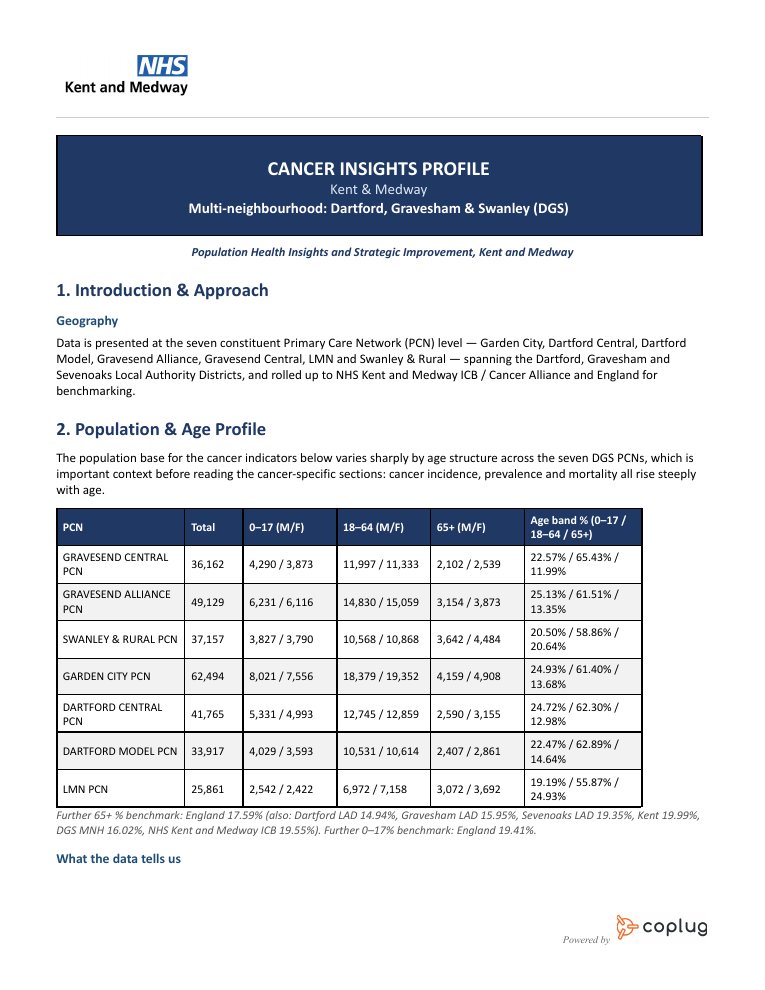
The profile
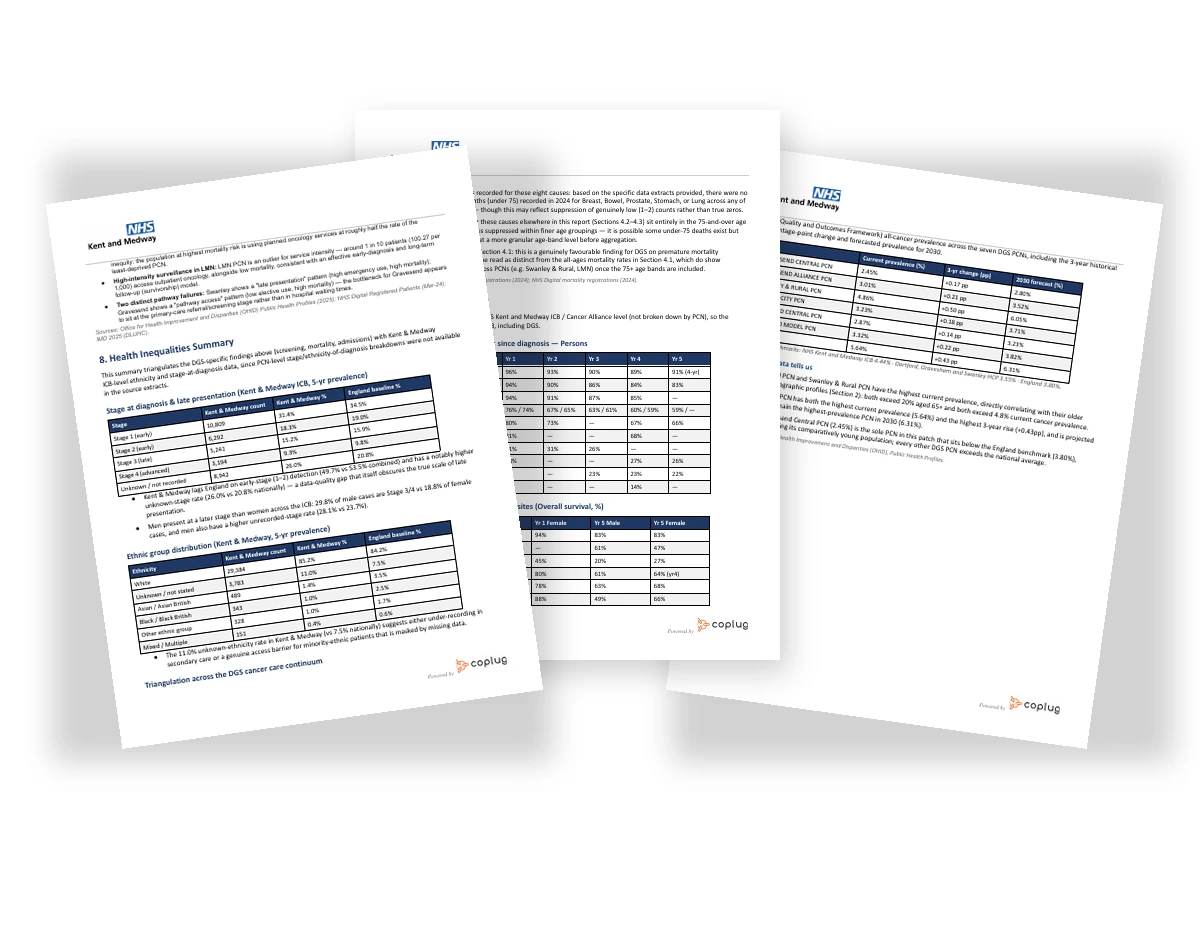
Example findings: Dartford, Gravesham and Swanley
The outputs are not just statistics. Each profile draws out findings and recommendations for commissioners, backed by Coplug's knowledge base of national policy and evidence.
- A screening gradient. Cervical and bowel screening coverage is lowest in the most deprived PCN and highest in the least deprived, with bowel coverage among the lowest in Kent.
- Age drives mortality. The highest crude cancer mortality sits in the oldest PCNs rather than the most deprived, pointing to age structure as the main driver.
- Late presentation. One PCN combines the highest emergency admission rate with high mortality, suggesting care that is reactive rather than planned.
- The inverse care law. The most deprived PCN has the lowest urgent referral rate, yet carries one of the highest breast cancer mortality burdens.
- Recommendation. Prioritise combined cervical and bowel screening outreach in the most deprived PCNs.
- Recommendation. Target culturally tailored prostate cancer awareness where Black communities are largest, in line with Core20PLUS5.
Backed by industry-validated calculators and methodologies developed with NHS partners, using OHID, ONS, NHS England, NCRAS and cancer waiting times data.