Healthcare case study · Trust board intelligence
A shared picture of local population and need
Medway NHS Foundation Trust · Analytics team, for board review
Coplug's spatial reasoning healthcare agent helped the Trust's analytics team build a board-level evidence base for Medway and Swale: population, housing-led growth, deprivation, primary care workforce, condition burden, hospital activity and access, across 12 PCNs and a custom health neighbourhood.
REDUCED OPERATIONAL LAG
~ 6 weeks
31 days of analysts time saved
- 38
- proprietary insights not available outside of Coplug
- 62
- insights across population, growth, need, activity and access
- 456k+
- residents across Medway and Swale
- 12 / 46
- PCNs and GP practices
The need
Challenge. Give board members a clear, evidence-led understanding of the population the Trust serves and how its needs are changing, to inform strategy and planning.
Why it was hard. The evidence sits across many national datasets at different geographies. Much of what matters to the board, such as housing-led growth, deprivation by age within each PCN and travel-time access, is not published for the Trust's footprint. ONS projections take limited account of planned housing.
Driver. Board-level strategy, planning and assurance.
What Coplug delivered
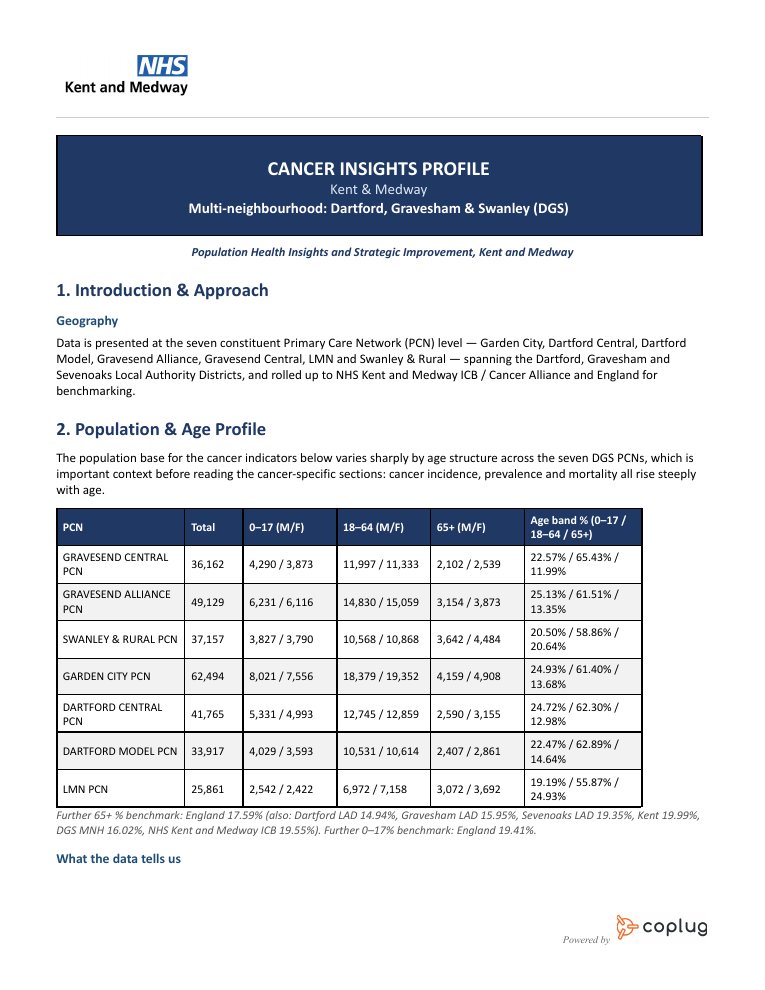
- Population overview: age structure and ethnicity by PCN
- Population growth: housing-led projections against the ONS baseline
- Housing impact on primary care estates
- PCN overview and deprivation
- Registered patients and workforce
- Condition prevalence, with 2030 forecasts
- Acute activity and patient flows
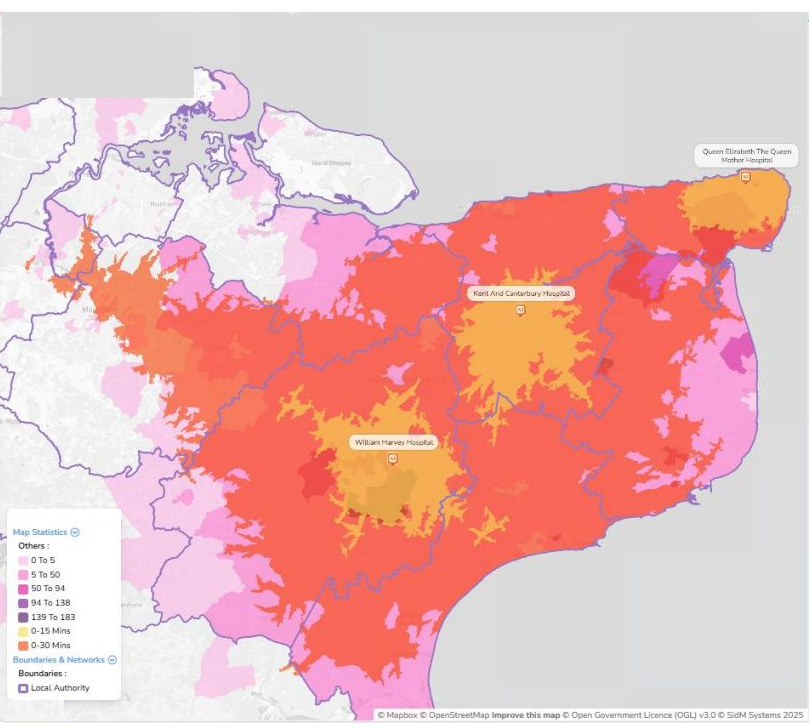
- Access to GP practices by car and public transport
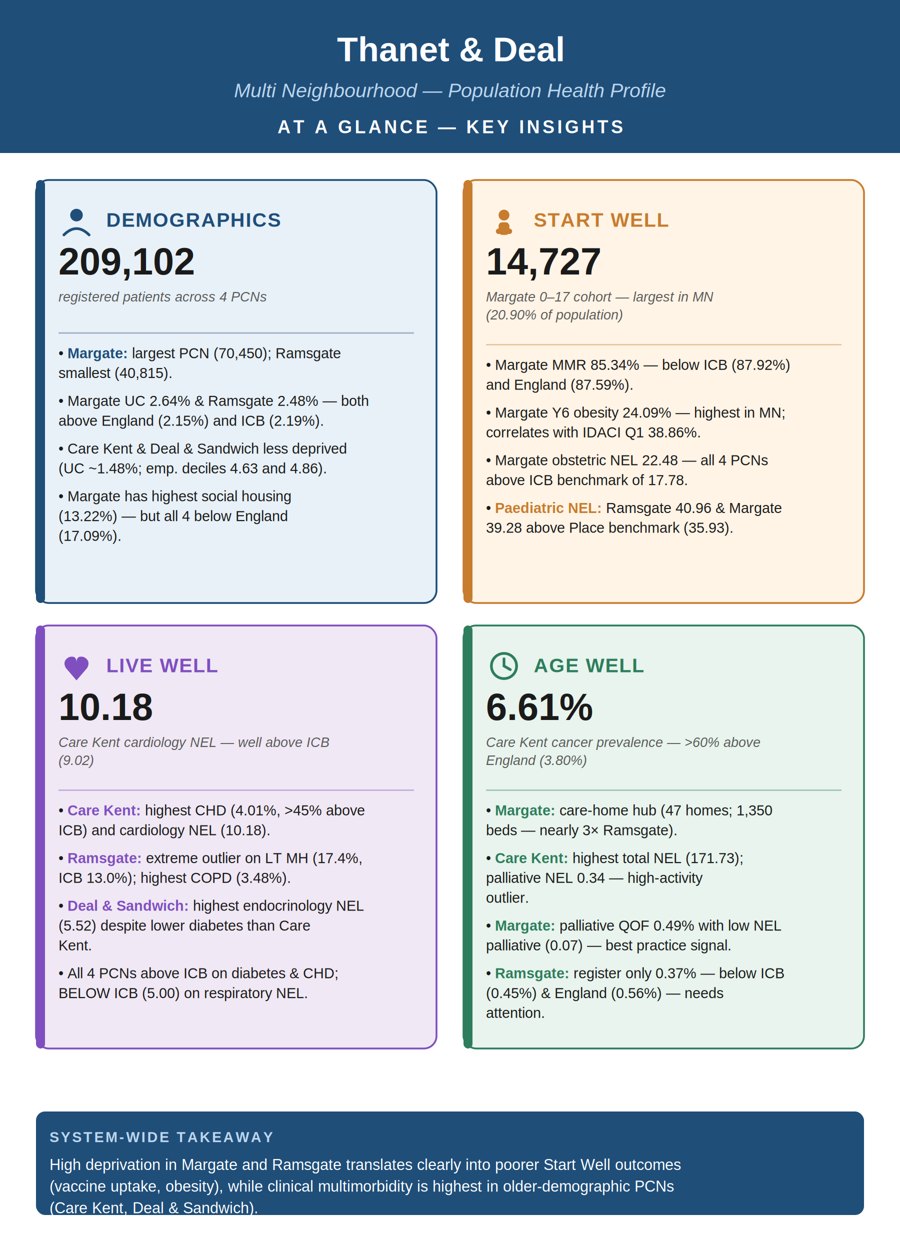
- Summary headlines for board review
Decision and impact
Decisions it can inform. Where growth and need are likely to place most pressure on services, and which PCNs and neighbourhoods could be the first focus for estates, workforce and partnership planning.
Outcome. A single board-level picture, presented at the geographies the Trust works with. It shows that housing-led growth, rather than demographic trend, is the main driver of future demand, and identifies where that growth meets the least existing capacity.
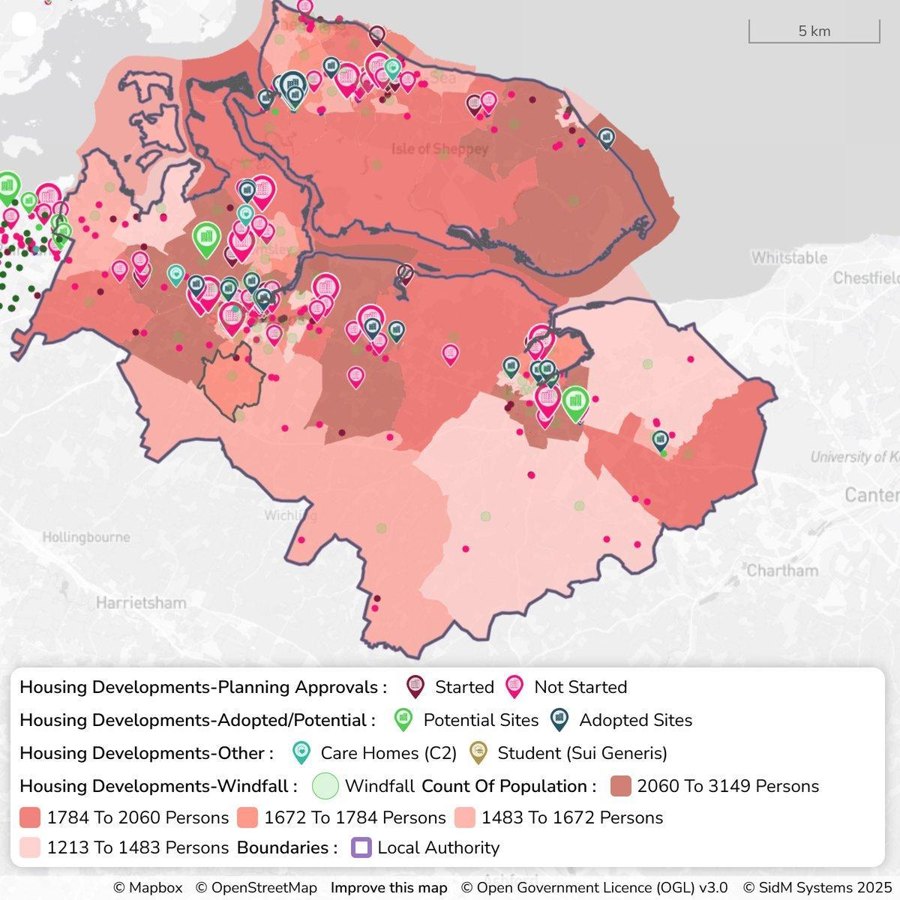
Where housing-led growth lands: Swale
The report
Key findings and recommendations
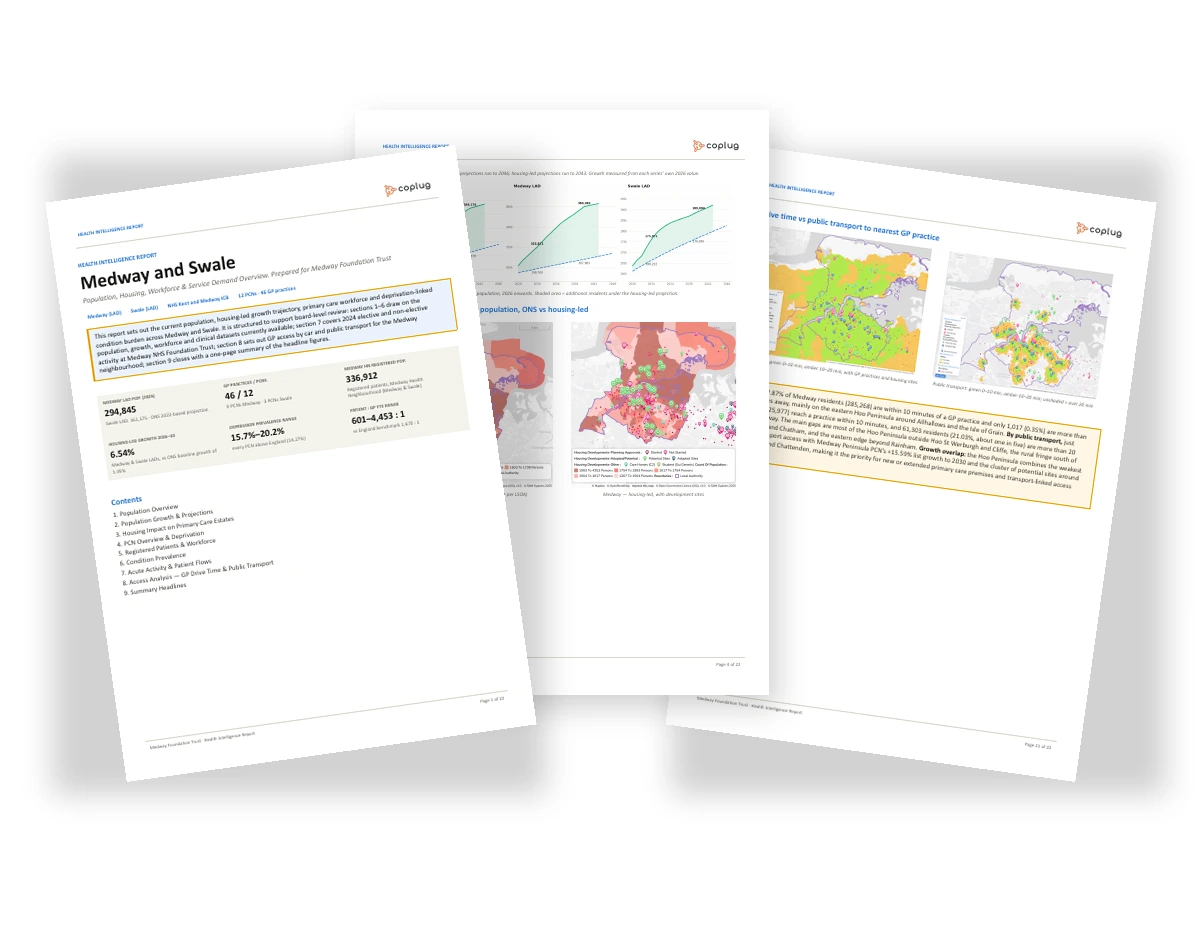
The outputs are not just statistics. Each section draws out findings and recommendations for the board, backed by Coplug's knowledge base of national policy and evidence.
- Growth is housing-led. Housing-led growth to 2030 runs more than three times the ONS trend, with the fastest growth on the Hoo Peninsula. Development, rather than demographic trend, is the main driver of future demand.
- Child poverty burden. Around 17,500 children live in neighbourhoods ranked among the 20% most deprived in England. Overall, nearly a quarter of registered patients live in these neighbourhoods, against about one in five nationally and one in six across the ICB.
- Uneven workforce capacity. Patient-to-GP ratios vary more than seven-fold between PCNs, with the heaviest workloads in urban Medway, where deprivation is also highest.
- Condition burden. Every PCN is above England for depression, and coastal areas carry the highest combined burden of diabetes and COPD.
- Access gaps where growth lands. Around one in five Medway residents is more than 20 minutes from a GP practice by public transport, concentrated where the largest housing allocations sit.
- Recommendation. Five PCNs combine the highest growth with the least workforce headroom, and are identified as the first focus for premises investment and workforce planning.
Backed by industry-validated calculators and methodologies developed with NHS partners, using NHS England, ONS, deprivation, QOF and hospital activity data.